
Fear Phase Around 7–8 Months
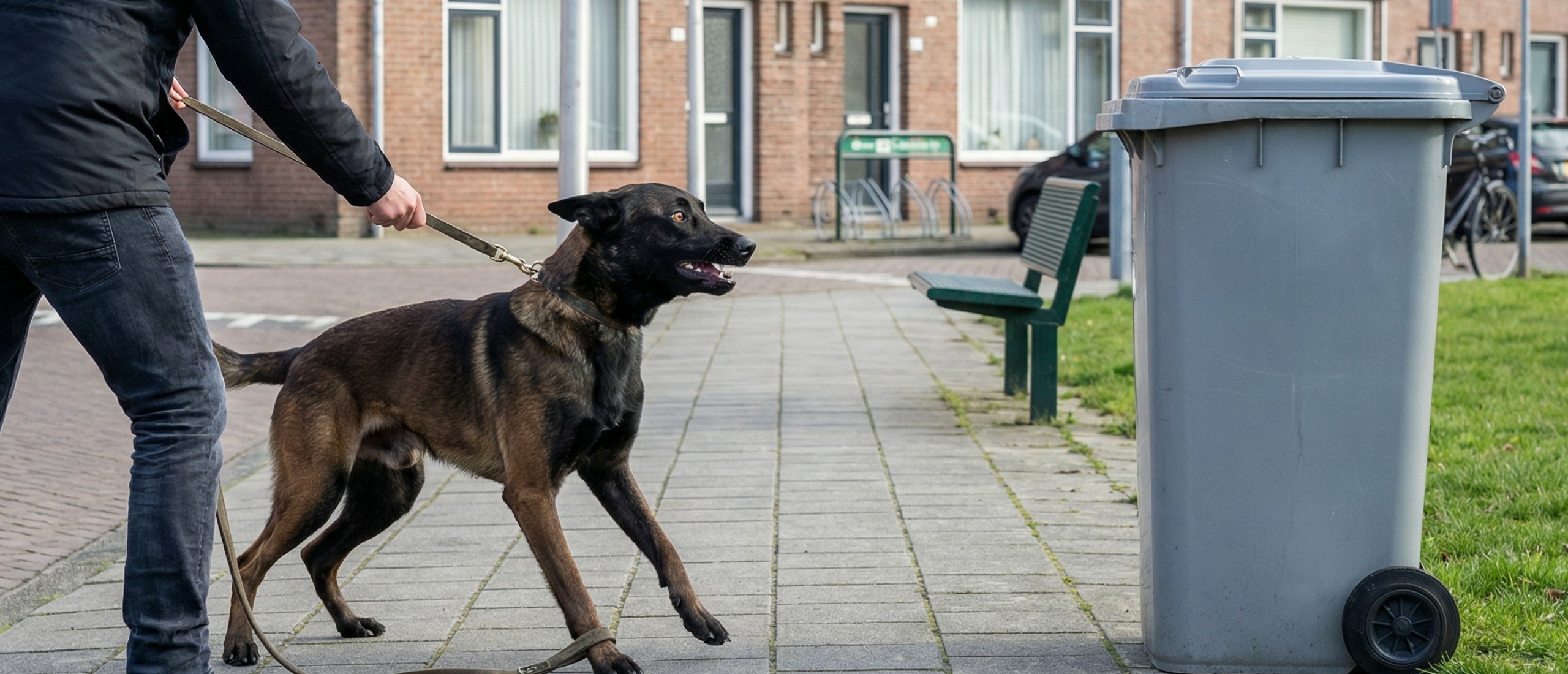
It can happen out of nowhere. Your young dog, who was never afraid of anything as a puppy, suddenly startles at a tree he has passed a hundred times before. Or he barks uncertainly at a person who is simply standing still. Completely normal behaviour at this age.
Around 7–8 months, many dogs go through a second fear phase. Their hormones change and they become more sensitive to stimuli. This is normal, and it is important that we handle it calmly. Above all, do not turn it into a problem.
I have seen this often, even with very strong puppies that were tested at ten weeks of age for the police puppy project. These dogs later became excellent working dogs that were not afraid of anything. Yet around 7–8 months we regularly saw this sudden fearful behaviour.
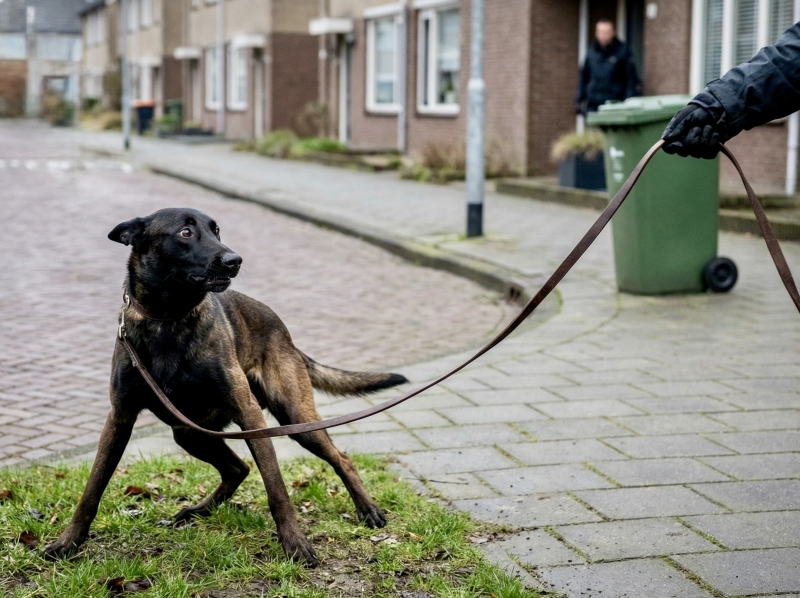
Young dogs can suddenly react to everyday things around 7–8 months of age.
For example, we trained puppies to become police tracking dogs on human scent. After good socialisation, they followed tracks in residential areas without any trouble. They did not care about people walking by or a garbage bin standing at the side of the road. Yet those same dogs could suddenly startle at exactly these normal objects around 7–8 months.
I had a colleague at the time who made this into a big problem. Despite my advice not to treat it as a problem, he rejected several pups because he thought they were not suitable. Later, these same young dogs developed with someone else into great working dogs, from driven police patrol dogs to even an arrest dog.
Example With Lucy
We recently experienced the same with our own young dog Lucy, at seven months old. While tracking in the village, she suddenly got scared by a rattling cart near a truck. She wanted to run away, and the driver said, “What a scared dog.” Based on my experience, I know this is not a problem. Lucy will develop into a good and confident dog.
The most important thing is that your dog learns there is nothing going on. Do not force him to do anything, stay calm yourself, and make sure he has positive experiences. This phase passes on its own. In normal circumstances, a young dog comes out of it just fine.
A fear phase at this age is normal. Your calm attitude helps your dog through this period the fastest.
Conclusion
By staying calm and supporting your dog, you prevent temporary insecurity from turning into long-term problem behaviour. The fear phase is part of growing up and it will pass.
Want to learn more about raising, socialisation and training?
In our training school you will not only find courses on teaching exercises, but also lessons about socialisation and handling both wanted and unwanted behaviour. With Premium+ you get access to all our training and more than 300 additional videos.
Check out 👉 our Premium+ Membership